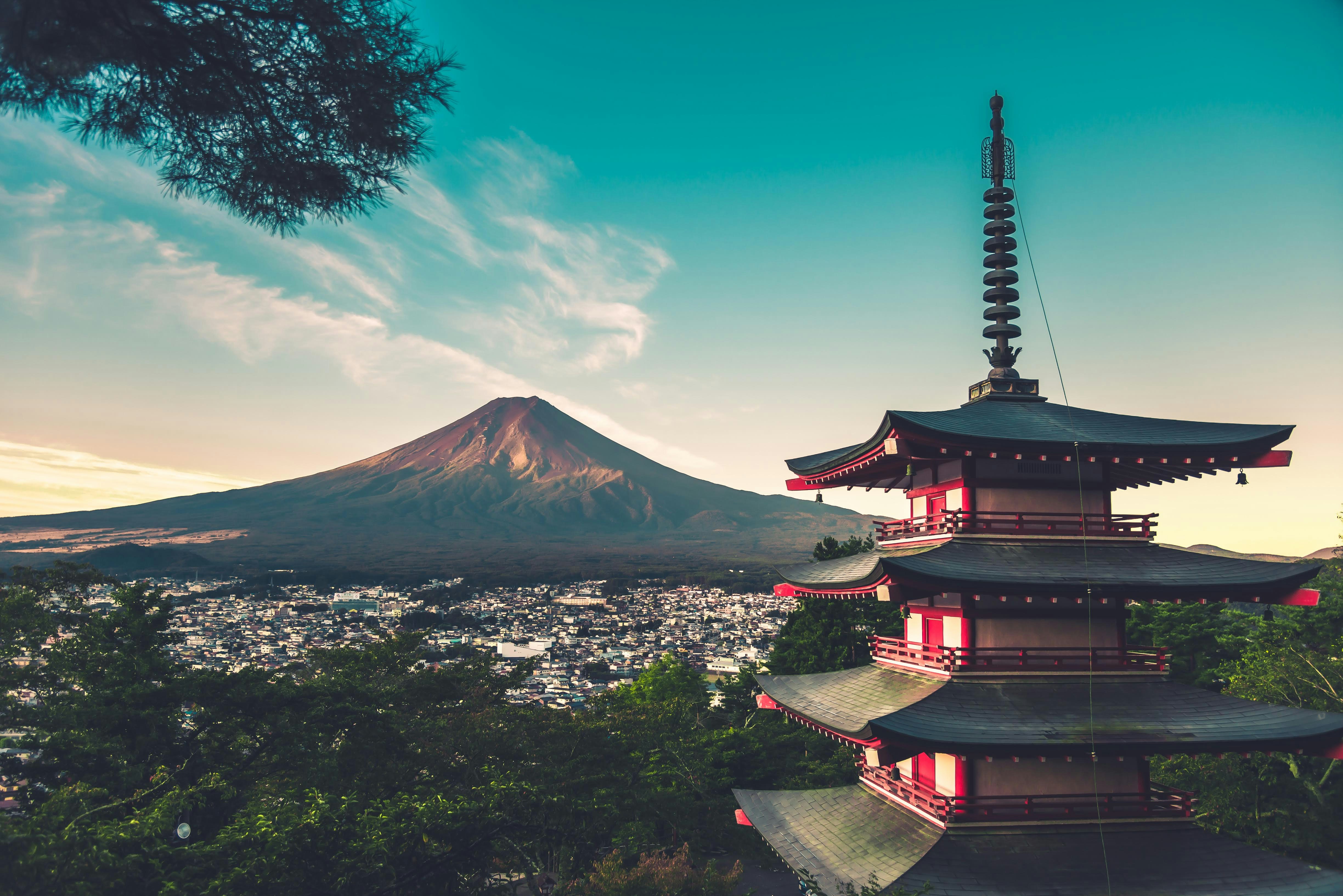
Mount Fuji
Mount Fuji
Mount Fuji
Mount Fuji
Mount Fuji, also known as Fujisan (富士山) in Japanese, is a remarkable and iconic landmark with a rich history and cultural significance. Here are some key facts about this majestic mountain:
Elevation and Location:
Mount Fuji rises to an impressive height of 12,388 feet (3,776 meters) near the Pacific coast of central Honshu, Japan.
It is situated approximately 60 miles (100 kilometers) west of the bustling Tokyo-Yokohama metropolitan area.
Volcanic Origins:
Fuji’s graceful volcanic cone was formed through volcanic activity that began around 100,000 years ago.
Although it has been dormant since its last eruption in 1707, geologists still classify it as an active stratovolcano.
Cultural Symbolism:
Mount Fuji holds immense cultural and spiritual significance for the Japanese people.
It is considered the sacred symbol of Japan, evoking a sense of national pride and personal identification.
Each summer, thousands of Japanese pilgrims climb to the shrine on its peak as a spiritual journey.
Artistic Inspiration:
Fuji’s image has been immortalized in countless works of Japanese art, including the famous woodblock prints by Hokusai in the series “Thirty-six Views of Mount Fuji.”
Its pleasingly symmetrical form and snow-capped peak have captivated artists, poets, and travelers for centuries.
UNESCO World Heritage Site:
Mount Fuji is the major feature of the Fuji-Hakone-Izu National Park (established in 1936).
In 2013, it was designated as a UNESCO World Heritage site, recognizing its natural beauty and cultural importance.
Mount Fuji, also known as Fujisan (富士山) in Japanese, is a remarkable and iconic landmark with a rich history and cultural significance. Here are some key facts about this majestic mountain:
Elevation and Location:
Mount Fuji rises to an impressive height of 12,388 feet (3,776 meters) near the Pacific coast of central Honshu, Japan.
It is situated approximately 60 miles (100 kilometers) west of the bustling Tokyo-Yokohama metropolitan area.
Volcanic Origins:
Fuji’s graceful volcanic cone was formed through volcanic activity that began around 100,000 years ago.
Although it has been dormant since its last eruption in 1707, geologists still classify it as an active stratovolcano.
Cultural Symbolism:
Mount Fuji holds immense cultural and spiritual significance for the Japanese people.
It is considered the sacred symbol of Japan, evoking a sense of national pride and personal identification.
Each summer, thousands of Japanese pilgrims climb to the shrine on its peak as a spiritual journey.
Artistic Inspiration:
Fuji’s image has been immortalized in countless works of Japanese art, including the famous woodblock prints by Hokusai in the series “Thirty-six Views of Mount Fuji.”
Its pleasingly symmetrical form and snow-capped peak have captivated artists, poets, and travelers for centuries.
UNESCO World Heritage Site:
Mount Fuji is the major feature of the Fuji-Hakone-Izu National Park (established in 1936).
In 2013, it was designated as a UNESCO World Heritage site, recognizing its natural beauty and cultural importance.
Mount Fuji, also known as Fujisan (富士山) in Japanese, is a remarkable and iconic landmark with a rich history and cultural significance. Here are some key facts about this majestic mountain:
Elevation and Location:
Mount Fuji rises to an impressive height of 12,388 feet (3,776 meters) near the Pacific coast of central Honshu, Japan.
It is situated approximately 60 miles (100 kilometers) west of the bustling Tokyo-Yokohama metropolitan area.
Volcanic Origins:
Fuji’s graceful volcanic cone was formed through volcanic activity that began around 100,000 years ago.
Although it has been dormant since its last eruption in 1707, geologists still classify it as an active stratovolcano.
Cultural Symbolism:
Mount Fuji holds immense cultural and spiritual significance for the Japanese people.
It is considered the sacred symbol of Japan, evoking a sense of national pride and personal identification.
Each summer, thousands of Japanese pilgrims climb to the shrine on its peak as a spiritual journey.
Artistic Inspiration:
Fuji’s image has been immortalized in countless works of Japanese art, including the famous woodblock prints by Hokusai in the series “Thirty-six Views of Mount Fuji.”
Its pleasingly symmetrical form and snow-capped peak have captivated artists, poets, and travelers for centuries.
UNESCO World Heritage Site:
Mount Fuji is the major feature of the Fuji-Hakone-Izu National Park (established in 1936).
In 2013, it was designated as a UNESCO World Heritage site, recognizing its natural beauty and cultural importance.
Mount Fuji, also known as Fujisan (富士山) in Japanese, is a remarkable and iconic landmark with a rich history and cultural significance. Here are some key facts about this majestic mountain:
Elevation and Location:
Mount Fuji rises to an impressive height of 12,388 feet (3,776 meters) near the Pacific coast of central Honshu, Japan.
It is situated approximately 60 miles (100 kilometers) west of the bustling Tokyo-Yokohama metropolitan area.
Volcanic Origins:
Fuji’s graceful volcanic cone was formed through volcanic activity that began around 100,000 years ago.
Although it has been dormant since its last eruption in 1707, geologists still classify it as an active stratovolcano.
Cultural Symbolism:
Mount Fuji holds immense cultural and spiritual significance for the Japanese people.
It is considered the sacred symbol of Japan, evoking a sense of national pride and personal identification.
Each summer, thousands of Japanese pilgrims climb to the shrine on its peak as a spiritual journey.
Artistic Inspiration:
Fuji’s image has been immortalized in countless works of Japanese art, including the famous woodblock prints by Hokusai in the series “Thirty-six Views of Mount Fuji.”
Its pleasingly symmetrical form and snow-capped peak have captivated artists, poets, and travelers for centuries.
UNESCO World Heritage Site:
Mount Fuji is the major feature of the Fuji-Hakone-Izu National Park (established in 1936).
In 2013, it was designated as a UNESCO World Heritage site, recognizing its natural beauty and cultural importance.
Book Trip
Book Trip
Book Trip